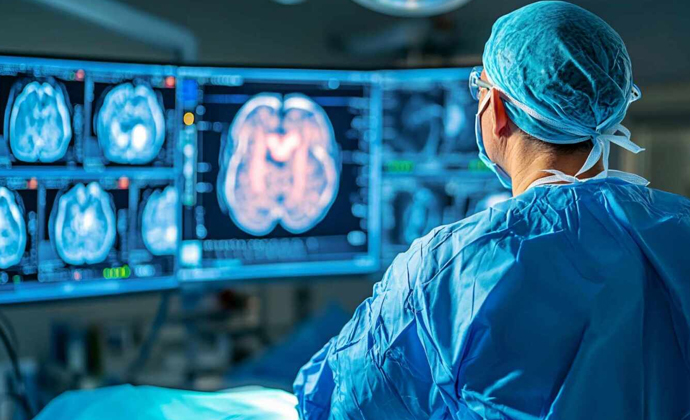
The Residency Program in Neurosurgery is designed to train highly qualified specialists in the surgical treatment of disorders and injuries of the central and peripheral nervous systems. Neurosurgery is one of the most complex and technologically advanced fields of medicine, requiring precision, advanced knowledge, and mastery of modern surgical techniques. During the program, residents study brain and spinal tumors, acute cerebrovascular disorders, traumatic injuries, congenital abnormalities, degenerative spinal diseases, and peripheral nerve pathologies, along with their surgical management. Training emphasizes the use of neuronavigation, microsurgery, endoscopic techniques, and modern neuroimaging technologies such as CT and MRI. Clinical training takes place in specialized neurosurgical centers, where residents participate in complex surgical procedures under expert supervision and learn comprehensive perioperative patient management. The curriculum integrates theoretical education, hands-on surgical experience, and research activity. Graduates are prepared to work in neurosurgical centers, multidisciplinary hospitals, emergency care systems, rehabilitation facilities, and research institutions as professional neurosurgeons.
 CAMU
CAMU
Neurosurgery
First Year
Fall
- 1.2 - Clinical pharmacology
- 2.1 - Neurosurgery
- 2.2 - Clinical resident supervision
- 2.3 - Training practice
- 2.4 - Independent education
- 3.1 - Traumatology and orthopedics
- 4.1 - Information and communication technologies
Credits: 55
Spring
- 1.1 - Valeology
- 2.1 - Neurosurgery
- 2.3 - Training practice
- 2.4 - Independent education
- 3.2 - Medical Radiology
- 3.3 - Neurology
- 4.2 - Foreign language